Conversation Week 2026

Next Conversation will take place from 31st August to 4th September at University of Barcelona.

The Topic

There is always an exchange.

How do we connect (for real) ?

And it is not just about the link !

The social fabric of our reality is about links, bonds and ties. What brings us together, makes us

argue and unify. There is always an alterity in that process, with whom we are exchanging

something, sometimes about something else, sometimes just about ourselves. These exchanges are omnipresent, any connection made, even their attempt contains the movement of an exchange. From the physical contact between two people dancing, to the psychologist inquiring about one’s action, any of our connection is about an exchange.

Therefore we pose a question, if there is always an exchange how do we connect ? What is it that makes us bond with each other ? While connectivity is discussed in many fields of social science – Palo Alto’s first axiom on communication or Milgram’s small world theory – connection is still often translated through the abstract idea of a “link”. If we follow a simplified definition of a system as interconnected elements, the superficiality of this view needs deeper investigation as to the true nature and meaning of connection. Connections being the essence of any human community, it is necessary to discuss how connection is made; how it develops and how it fades away.

Considering that the specific nature of human connection within their shared activities, this discussion aims to further dig into the details of what make human connections. What dimensions? On which level of which scale? With whom and why? It aims to target how do we operate as social animals and how communities, network and collective might emerge from a simple shared presence to a willing full shared practice.

What to expect

Since 2024 CSRP Institute started a process of searching and testing a way of supporting the development of research as per starting from how it originally started. Via dialogues in letter forms and gatherings. The Banathy Conversations methodology was a starting point from where is emerging the bottom-up approach is recognised as necessary and fullfilling among attendance.

Together with the wide umbrella theme field topics come along creating the space of dedicated teams, 2 or 3 per week. In this occasion we will have two starting contextual topics lead by two doctorate students from 2 different backgrounds and generations. Teams will come together according to topic affinities.

Conversation 2024; Conversation 2025

Be part of a Conversation

If you feel committend in contributing 5 days long conversation in presence with other people willing to dive deep and entertain a dialogue along the affirmation of “There is always an exchange” leading to the question “How do we connect?” and all their possible fields of implication, you found the time, place and people to do that.

For more info

2025n1 Banathy Conversation + CSRP Institute AGM

The 2025n1 Banathy Conversation is scheduled to convene at the Center for Corporate Rehabilitation near Fairfield, Iowa, beginning on Sunday, April 13, 2025, and ending on (Good) Friday, April 18.

Full programm and modalities att the following link on googlesites

Participants in the Conversation can plan for the event with more detailed descriptions under:

  • Booking (including Lodging, Registering, Routing)
  • Equipping (including Apple-Platform, Google-Platform, Alternative-Platforms)
  • Engaging (including Connecting, Agreeing, Gathering, Exploring, Reflecting, Recollecting)

The Conversation centers on Gathering, Exploring and Reflecting, in-person, over six days.  Activities preceding and following the residential event are conducted on Google Workspace.

Call for Participation

The future is already here — it’s just not very evenly distributed.  [William Gibson]

Theme:  Adapting or branching: Anticipating nature(s)

We simultaneously live in multiple systems. Each system has its own nature. As each system evolves, its constituents may perceive the paces of changes and priorities for action differently.  Sometimes attention is mostly drawn within.  Looking without at other times, smaller-faster pacings may raise alerts, or slower-larger levels may be taken as too rigid.

A system normally deals with anticipated events, so that customary adaptations are a matter of course.  Living systems may naturally transform, e.g. as a caterpillar becomes a butterfly.  As time progresses a system may reach its limits.  Social systems exercising consciousness may have the capacity to evolve into a different scale, e.g. a town expanding into a city, or winding down into a village.  Organizations with less foresight may find themselves in an unexpected rapid decline –  a collapse. 

Different people deal with systems changes at different scales, scopes and speeds. At a global level, the impact of climate change on human habitation has been a significant concern brought by scientists into the spotlight.   In complexity, the relations between causes and effects may not be readily traceable.  Extreme weather conditions (e.g. storms, floods, droughts) that impact farming can ripple through supply chains into food webs.  Families choosing to migrate away from homes they have known many generations is a symptom, not a defect.

Some in more fortunate locales have institutional resources that can buffer intense shifts. Work systems, family systems, educational systems, healthcare systems and others weave together in a meshwork. Privileges enjoyed by some may be inaccessible to others.

How do we make choices for ourselves, and for others? Which systems can we affect, and how would we bring about the changes?

The opportunity to explore possibilities for systems changes can be unpacked in a five-day Banathy Conversation event.  Small groups of deep thinkers, experts, and scholars collaborate in defining questions worth pursuing, and considering new frontiers.  Leading up to the in-person event, preliminary discussions are conducted online.  Following the event, participants report on their experiences in proceedings.

Planning to participate

CSRP Institute invites individuals and groups to apply as participants for the first Banathy Conversation of 2025. We will convene at the Center for Corporate Rehabilitation near Fairfield, Iowa.  This immersive experience begins on Sunday. April 13, 2025 at 5:00 pm, and runs through Friday, April 19 at noon.  The 2025 Annual General Meeting of CSRP Institute will be held on Friday, 2:00 pm to 4 pm.

The fee for attending is nominally $100USD. Located on a farm in the rural heartland, participants may be asked to contribute funds and/or effort towards shared meals.  Families are welcomed, and some childcare can be arranged.

The facility has 5 bedrooms available, with a few options for attendees into couch-surfing. Meeting areas could accommodate up to three parallel conversation groups. We expect fewer than 20 participants, in total. Offsite accommodations in town may be an option for visitors arriving with cars.

The venue is located at a 75 minute drive south of Cedar Rapids Municipal Airport, or 2 hours west of Quad Cities International Airport in Moline. We may help in coordinating rides for air travellers.

Pre-conference collaboration and post-conference proceedings will be coordinated on lab.csrp.institute. Participants will be granted Google Workspace accounts for access to shared drives, online meetings, and chat.

Plans are underway for a larger Banathy Conversation 2025 second event in southeast Asia.  Current timing under investigation is no earlier than the beginning of September, and no later than the first week of October.

The 2024 Banathy Conversation was held in Lugano, Switzerland  from September 29 to October 4.

Interested parties can contact Susu Nousala, Gary Metcalf, or David Ing, for more details.

References

Hawk, D. L. (2019). Too Early, Too Late, Now What? AuthorHouse. https://www.authorhouse.com/en/bookstore/bookdetails/799308-too-early-too-late-now-what 

Homer-Dixon, T. (2020). Commanding hope: The power we have to renew a world in peril. Knopf Canada. https://commandinghope.com/ 

Lawrence, M., Homer-Dixon, T., Janzwood, S., Rockstrom, J., Renn, O., & Donges, J. F. (2023). Global polycrisis: The causal mechanisms of crisis entanglement (SSRN Scholarly Paper No. 4483556). https://doi.org/10.2139/ssrn.4483556 

Rosen, J. (2022). Robert Rosen’s Anticipatory Systems Theory: The Science of Life and Mind. Mathematics, 10(22), Article 22. https://doi.org/10.3390/math10224172 

What is a Banathy Conversation?

Systems inquiries inviting international participants for a residential learning experience had have a long history in Austria.

The Banathy Conversation, as implemented by CSRP Institute, derives from the original intents of early convenings.

“Bela Banathy defined a conversation as being:

  • a collectively guided disciplined inquiry,
  • an exploration of issues of social/societal significance,
  • engaged by scholarly[1] practitioners in self-organized teams,
  • who select a theme for their conversation,
  • which is initiated in the course of a preparation phase that leads to an intensive learning phase.”  [Dyer (2016), p. 5]

[1] “Conversation methods as described here are no longer restricted to those involving “scholarly practitioners”. The techniques described are equally applicable to any context where the aim is to draw on the creative capacity of everyone involved. Hence it can be applied to a business context where there is genuine openness to contribution from all.”

CSRP Institute draws on the techniques and experiences of Banathy Conversations, extending pre-residential and post-residential activities with Internet communications technologies.

Reference

Dyer, Gordon. 2016. “Guidebook for Designing and Sustaining Effective Conversation.” International Federation for Systems Research. http://archive-ifsr.org/publications/conversations/, cached at drive.lab.csrp.institute.
Symposium 2024 – The question of “Human Centricity”, impacts of current and future transformations

CSRP Institute’s Symposium will draw on the techniques and experiences of Banathy Conversations method implementing the conversation process via extending pre-residential and post-residential activities with Internet communications technologies.

The Banathy Conversation, as implemented by CSRP Institute, derives from the original intents of early convenings. The Conversation will center on Gathering, Exploring and Reflecting, in-person, over six days.  Activities preceding and following the residential event are conducted on Google Workspace.

This deep dive conversational experience is scheduled in Lugano, Switzerland, beginning on Sunday, September 29, 2024, and ending on Friday, October 4.

The full process and ways to attend are on the dedicated website https://sites.google.com/lab.csrp.institute/2024-banathy-conversation

Below the introductury call and agenda for these days

For more info

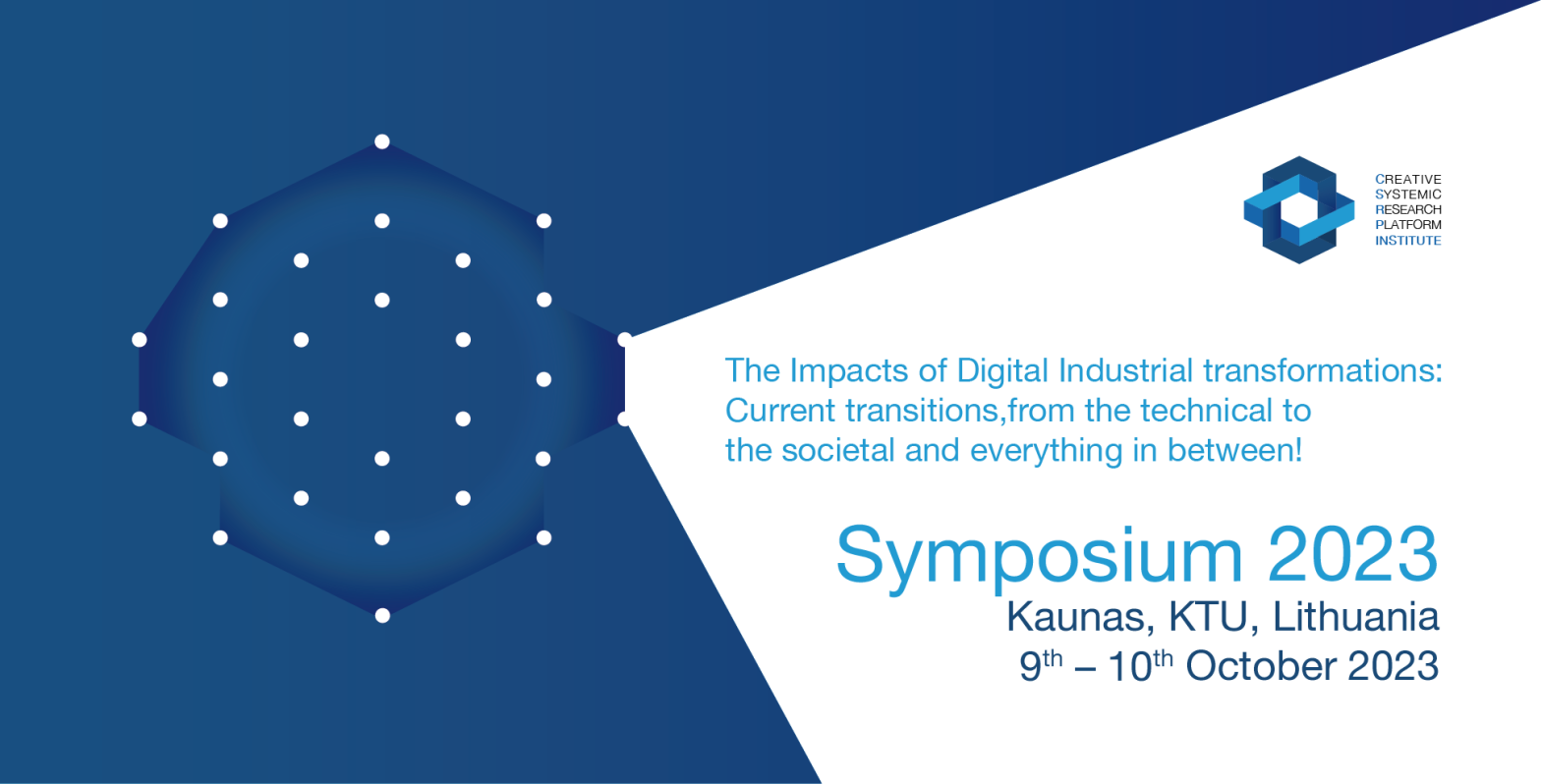
Symposium 2023 –The Impacts of Digital Industrial transformations

We are happy to present the Call and Agenda of our 3nd Symposium! This year, the modality is a open discussion about the topic. We will be connecting from Kaunas, KTU, Lithuania, on the 9th and 10th October 2023!


The call is open to all! You are welcome to join and contribute to the discussion process.

Contact us to receive the access link for the discussion

The theme of the 2023 Symposium Discussions – The impacts of Digital industrial transformations

This year we have a particular approach and task. We have many members involved with the development of a book, which is part of the EU horizon funding. So it seemed logical to invite authors along to discuss their chapters, including concurrent areas of interest, such as the collaboration process and the like.

The Book Proposal Summary:

The digital industrial transformation was successful in delivering technical product delivery-based objectives. Industry 5.0 was intended to address the socio-environmental imbalances, but has not been able to stem the increasingly rapid pace of technological advancement. In the current state, Industry 5.0 policy is not providing the necessary guidance, leaving an unintended misalignment between technology and society. This book foreshadows the needed changes in order to fulfill Industry 5.0 promises. This book is the outcome of four years of exploratory research by an EU Horizon 2020 funded team, and other industry experts, on the impact of digitalization on management and economics. It provides a systemic perspective of Industry 5.0, giving insights into the anticipated changes in industrial dynamics and relevant policies.

Symposium Agenda (EEST Time)

October 9th

10.00   Coffee&Chat moment in presence and online (catch up moment)

10.30   Welcome and Introduction

10.45   Theme kick off discussion

Lead speakers:

Rohan Fernando (Australia online)

Manuel Morales (local)

Morteza Ghobakhloo (local)

13.30   Lunch break

15.00   afternoon theme discussion

Lead speakers:

Jim Spohrer (US online)

Thomas Marlowe (NY online)

Gary Metcalf (US online)

18.00   End discussion session

19.00   Dinner

October 10th

11.00   Extension Discussion Time

Summary and closing comments for CSRP Institute Symposium

13.30   Lunch

15.00   AGM meeting

16.30   Closing of the AGM for 2023.

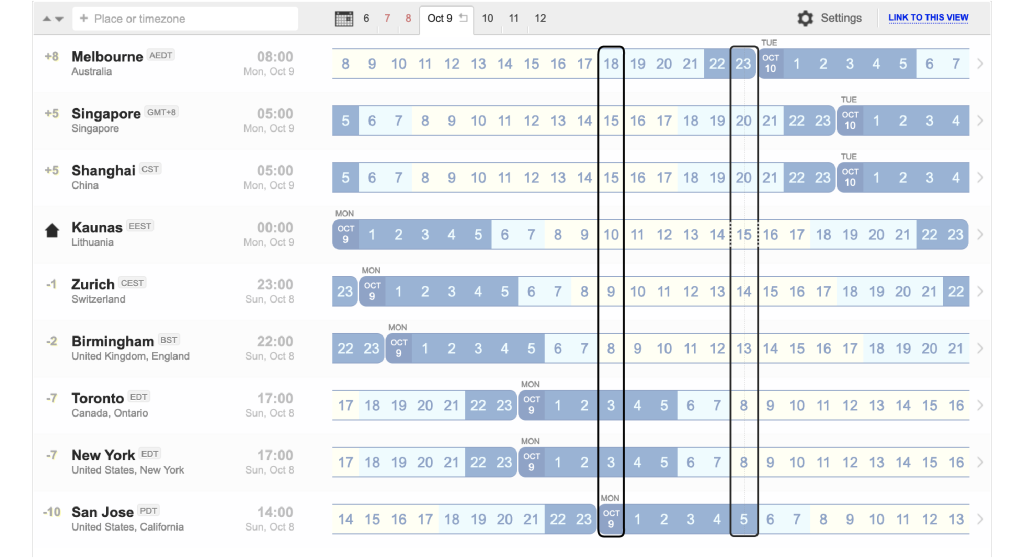
Time zone table – OCT 9 2023

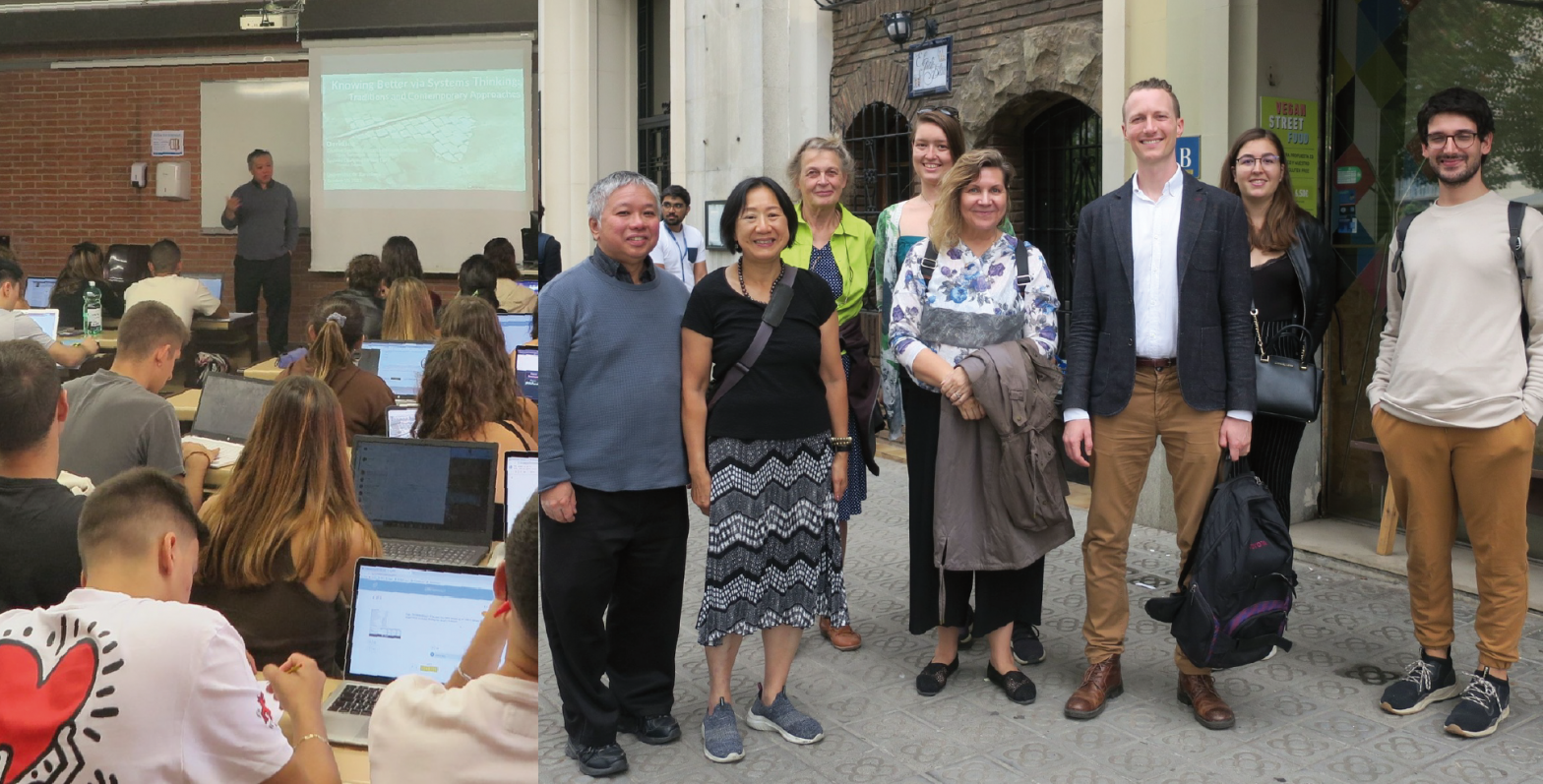
After Symposium straight to Classroom

David Ing lecturing on “Knowing Better Via Systems Thinking” for Ryan Armstrong, Ph.D. third year class on International Operations Management at Universitat de Barcelona Business School.

Access to the lectures:

2022/10/10 Knowing Better via Systems Thinking: Traditions and Contemporary Approaches

2022/10/10 Reifying Systems Thinking towards Changes: Rhythmic Shifts, (Con)Texture, and Propensity amongst Living Systems

Symposium 2022 – Thought Pieces Schedule

CSRP Institute Symposium 2022 call collected nine Thought Pieces! The discussion schedule of the thoughts follows below:

Thu, Oct 6 (Spanish time currently CEST)

10.00 – 10:10 am: Welcome & Introduction

Slot 1: Susu Nousala, Creative Systemic Research and future developmental directions, Publication and Communication thought piece

Slot 2:  Marie Davidova, The Systemic Approach to Architectural Performance (SAAP)

12:30 – 14.00 pm: Lunch Break

14:00 – 14:05 pm: Brief Summary of the morning thoughts

Slot 3: Thomas Marlowe, Integration & Dis-Integration

Slot 4: Petra Johnson, the matter ecologic

Slot 5: Dan Zhu, Patterns methods: design future hybrid spaces for creative learning and working

17:00 pm: End Thursday session

Fri, Oct 7 (Spanish time currently CEST)

10:00 – 10:10 am: Brief Summary of yesterday thoughts

Slot 6: Yi-Heng Cheng: Prosperity in Resilience

Slot 7: Marco Cataffo: articulating design decisions post-consumerism

12:30 – 14.00 pm: Lunch Break

14:00 – 14:05 pm: Brief Summary of the morning thoughts

Slot 8: David Ing, Systems changes as when+where: Crossing thresholds or animating propensity?

Slot 9: Jelena Sucic, What/How/Why makes us move forward? The Nature of Behaviour

16:00 – 17:00 pm: Summary discussion per each speaker and end Friday session

Learn more about the call

To partecipate in the discussion contact us via email and we will share the zoom link with you

Symposium 2022 – New approaches for 21st living: New ways of engaging, learning and understanding intangible systemic approaches

We are happy to present the Call and Agenda of our 2nd Symposium! This year, the modality changes with a format that favours discussion. We will be connecting from Mòra d’Ebre, Spain, on the 6th,7th, and 8th of October 2022!


The call is open to all! You are welcome to submit a thought piece and/or simply join the discussion process. The intended theme has an intentional broad area of interest, to reduce limitations for participants and potential project development. Topics could for example include technical/engineering, cultural heritage, any type of social adaptive structures and related topics

Creative Systemic Research Platform, the Concept
What do we mean by creative systemic? This area of research has been on-going, developing (through various stages) over the past 15+ years, specifically targeting the concept of tacit knowledge network dynamics as related to systemic structures. The structural dynamics exposed a very creative aspect of this research approach. The creative could be found embedded in the creation and engagement of the multitude of relationship dynamics and interaction between all (including elements, actors, levels, layers and the like).
So what are examples of the all important emergence of these structural dynamics and their rhythms, patterns and behaviours? The terms multi, trans, inter, intra, poli – disciplinary approaches have been in discussion for many years, but the way in which identification, discussion, engagement and conceptual development have evolved highlights the continuation of vigorous debate within these various contexts. The development of a “platform” is not a new concept but it remains an important one, and has proven to be a critical methodological approach to support any nexus of various contexts at play, typical for creative systemic research. Now more than ever, the capability of developing and delivering a wide range of learning systems has become a necessary skill set. The successful engagement with any learning system has become critical, for in depth understanding of the way we are, and how we are living and existing within our immediate environments. This also extends to include the relationships that link us between the urban, peri-urban and rural environments.


The Symposium Format and Submissions
This discussion invites thought pieces or extended abstracts or academic posters (aim for half to one page) that expand on the bottom up, the nexus of disciplinary approaches, including cases that discuss thinking and practice, from any type of interactive project/performances or processes, case studies through to field
experiences.
We will ask you to send in your submissions and your preferred working titles so that we can schedule your presentations to our colleagues for digestion before the symposium begins. These thought pieces will create a type of table of contents for open discussion, with a view to exploring the relationships with the concept of creative systemic research and practice. The presented concepts/thought pieces have the possibility to go through the multimedia publication process, with a publication date planned for October/November 2023.
The publication process will be presented at the symposium as a thought piece and part of the introduction for the Symposium.

Send submission pieces to csrp.institute@gmail.com
Subscribe for attendance and participation in the discussion at csrp.institute@gmail.com
The zoom link will be sent before the start for the online attendance.

Agenda Symposium 2022 (CEST, UTC +1)

October 6th:
10 am – Welcome and introduction
10.15 am – Presenting the thought pieces (approx. 10 mins each, including any current Australasian colleagues)
12.30 pm – Lunch
14.00 pm – Open discussion and formulation of tacit table of contents for topic relationships (also any
presentations from our current our Canadian and U.S. colleagues).
17.00 pm – End of formal discussions.
19.00 pm – Dinner


October 7th:
10 am – Summary of previous discussions (including any current Australasian colleagues)
12.30 pm – Lunch
14.00 pm – Open discussion and formulation of processes for topic continuation into next year 2023. (also
summary discussion with current our Canadian and U.S. colleagues).
17.00pm – End of formal discussions.
19.00pm – Dinner


October 8th:
11.00 am – Summary and closing comments for CSRP Institute Symposium
12.30 pm – Lunch
14.00 pm – AGM meeting
15.30 pm– Closing of the AGM for 2022.

Symposium I Diversity in systemic practice and thinking: the program

We are happy to announce the CSRP Institute’s First Symposium program, keeping in mind the current restrictions, we have figured out a time and place where at least some of us will manage to gather together on the 7th November 2021 from Bruxelles!The intent for this year is to have a small gathering to catch up on research and projects, and to more easily organise the CSRP Institute’s next steps. The participation is open also to interested non-members within this years limited holding capacity. We have programmed 7 short talks within the Symposium’s theme “Diversity in systemic practice and thinking” from people among us, including of course an Open Discussion session in the afternoon. All of them will be accessible from a Zoom meeting link you will receive for participation.  

For more info or to register